Do you use the student-centered approach in your geography classroom? Student-centered learning is an educational approach that prioritizes the needs and interests of the individual student. In student-centered learning, the student actively participates in their education. They are not passive recipients of information. This approach focuses on creating a learning environment that is engaging and interactive. It is also personalized to meet each student’s unique needs and strengths. It encourages students to take ownership of their learning. It empowers them to think critically. They learn to problem-solve and apply knowledge in meaningful ways.
One of the key principles of student-centered learning is the shift from a teacher-centered to a student-centered classroom. In a teacher-centered classroom, the teacher is the primary source of knowledge and authority. In contrast, in a student-centered classroom, the teacher serves as a facilitator and guide. The teacher supports students as they explore and discover information on their own. This approach promotes a more collaborative and interactive learning experience. Students are encouraged to ask questions. They engage in discussions. They work together to solve problems.
Student-centered learning is a powerful educational approach that can foster creativity, critical thinking, and lifelong learning skills in students. By focusing on the individual needs and interests of each student, this approach nurtures a love for learning. It also fosters a sense of independence and autonomy. This approach prepares students for academic success. It also equips them with the skills and mindset needed to navigate the complexities of the modern world.
So what does this look like in the Geography classroom?
CHOICE BOARDS: One simple approach to give students autonomy in their learning is to provide various ways for them to learn. Additionally, offering diverse options for presenting information empowers students. Let’s say you are studying China’s Tiananmen Square Massacre of 1989. You are also studying the concept of natural rights, comparing how China’s government impaired the natural rights that its citizens were born with. These include the right to “life, liberty, and the pursuit of happiness.” A student choice board is a good way to have students explore and present the information/learning concept. Give them choices. They can write a poem or compose a song. They can create a diagram or write a parody. Alternatively, they can design a propaganda poster, write a children’s book, develop a game, create a picture collage, etc.

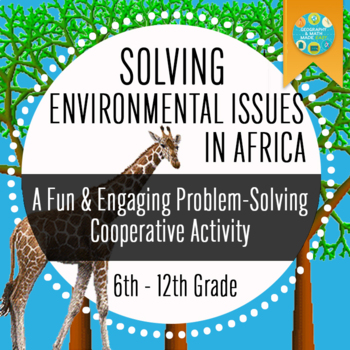
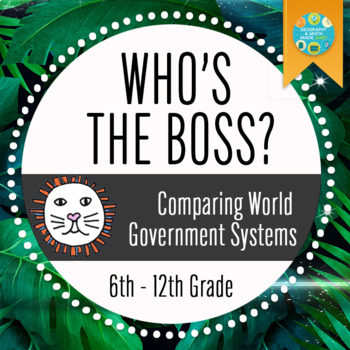
PROBLEM-SOLVING ACTIVITIES: Giving students a problem to solve in cooperative learning activity is another way to encourage student-centered learning. An example of this would be Solving Environmental Problems of Africa or Who’s The Boss? Comparing World Government Types. Students can be given a research guide sheet that walks them through solving various environmental problems in Africa. In this lesson, students will research environmental issues and will follow a step-by-step process of solving the problem. You want to encourage students to think through possible solutions and come to a group conscience on the best solution. In Who’s the Boss, students will become familiar with the various types of government. Students will encounter various scenarios. They will use the knowledge they learned about government types. Then, they will decide which government type would work best in each situation.
STATION LEARNING: Station learning is an approach to education. It places the focus on the individual student. This makes it a truly student-centered learning experience. Station learning differs from the traditional classroom setting. In traditional settings, the teacher is the central figure and conveys information to the entire class at once. Station learning allows students to work at their own pace and level of understanding. Each student can move through different stations or activities at their own speed. This approach allows for personalized learning experiences. It caters to their individual needs and abilities. By placing the student at the center of their own learning, station learning encourages autonomy, independence, and self-directed learning. Students have the freedom to choose which stations they want to work on. They decide how to tackle each task and how much time to spend on each activity. This level of choice and control gives students the power to own their learning. It encourages them to actively join in their education, rather than being passive recipients of information.

OTHER WAYS TO ENCOURAGE STUDENT-CENTERED LEARNING:
✅ Collaborative learning: Students work together on projects or analyze readings in groups instead of listening to lectures.
✅ Personalized instruction: Teachers consider each student’s individual learning needs when making instructional decisions.
✅ Formative assessment: Students assess their own learning and support their classmates’ learning.
✅ Active learning: Students are directly involved in the learning process, performing activities and thinking critically.
✅ Projects: Students research, understand, and use knowledge to solve problems at their own pace.
✅ Interactive presentations: Based on the idea that teaching is a learning experience.
✅ Concept mapping: Students create concept maps.
✅ Modeling: Students draw models.
✅ Self-paced learning: Students learn at their own pace.
✅ Multimedia learning: Students learn using multimedia.

Share your answer in the comments section below.
Sign Up for our Newsletter Here:
FOLLOW US
Follow us on our social media accounts and various teacher resource platforms. Simply click the icons below and follow or like us.
Online Stores:



Social Media


#geographyandmathmadeeasy#teachertherapy#therapy#geography#middleschool#highschool
 Geography & Math Made Easy